News
MCIMX6Q5EYM10AC: Features, Specs & More
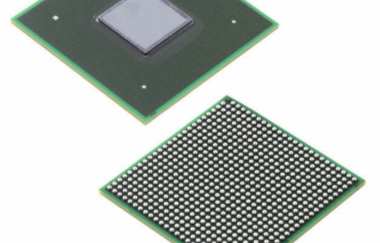
The MCIMX6Q5EYM10AC is a 32-bit quad-core microprocessor operating at up to 1.0GHz. It integrates advanced multimedia processing, high-speed connectivity interfaces, and strong security features. In this comprehensive article, we'll delve into the intricacies of the MCIMX6Q5EYM10AC, uncovering its definition, key features, specifications, applications, and a closer look at its manufacturer.
Catalog
MCIMX6Q5EYM10AC’s Manufacturer
MCIMX6Q5EYM10AC’s Overview
The MCIMX6Q5EYM10AC is a high-performance microprocessor built on the ARM Cortex-A9 architecture. It belongs to the i.MX6Q family developed for advanced embedded computing systems. This processor is widely used in industrial control, multimedia platforms, and IoT edge devices due to its strong balance of performance, power efficiency, and integration capabilities. It is designed to support complex operating systems and demanding multimedia workloads in embedded environments.
Key Features
Let's delve into the standout features that make the MCIMX6Q5EYM10AC a standout in the world of electronics:
The MCIMX6Q5EYM10AC delivers a powerful combination of processing, graphics, and connectivity capabilities.
It features a quad-core ARM Cortex-A9 processor architecture.
It operates at a maximum frequency of 1.0GHz.
It supports NEON SIMD multimedia acceleration.
It integrates advanced graphics processing capabilities.
It supports multiple memory types including DDR3 and LPDDR2.
It provides Gigabit Ethernet connectivity.
It includes USB 2.0 interfaces with PHY support.
It integrates SATA 3Gbps storage interface support.
It supports multiple display and interface controllers.
It includes strong security features such as ARM TrustZone technology.
Specifications
Now, let's take a closer look at the technical specifications that define the capabilities of the MCIMX6Q5EYM10AC:
Type | Parameter |
Core Processor | ARM® Cortex®-A9 |
Number of Cores/Bus Width | 4 Core, 32-Bit |
Speed | 1.0GHz |
Co-Processors/DSP | Multimedia; NEON™ SIMD |
RAM Controllers | LPDDR2, LVDDR3, DDR3 |
Graphics Acceleration | Yes |
Display & Interface Controllers | Keypad, LCD |
Ethernet | 10/100/1000Mbps (1) |
SATA | SATA 3Gbps (1) |
USB | USB 2.0 + PHY (4) |
Voltage - I/O | 1.8V, 2.5V, 2.8V, 3.3V |
Operating Temperature | -20°C ~ 105°C (TJ) |
Security Features | ARM TZ, Boot Security, Cryptography, RTIC, Secure Fusebox, Secure JTAG, Secure Memory, Secure RTC, Tamper Detection |
Mounting Type | Surface Mount |
Package / Case | 624-LFBGA, FCBGA |
Additional Interfaces | CAN, I2C, I2S, MMC/SD/SDIO, SAI, SPI, SSI, UART |
Applications
The MCIMX6Q5EYM10AC is widely adopted across multiple embedded industries.
It is used in industrial automation systems.
It is used in human-machine interface (HMI) devices.
It is used in automotive infotainment platforms.
It is used in medical diagnostic equipment.
It is used in smart home and IoT gateway devices.
It is used in digital signage and multimedia terminals.
It is used in network and communication equipment.
Its strong multimedia and connectivity capabilities make it suitable for high-reliability embedded environments.
MCIMX6Q5EYM10AC’s Manufacturer
Freescale Semiconductor, Inc., now seamlessly integrated into NXP Semiconductors, stands as a pioneering force in the semiconductor industry. Renowned for its cutting-edge technologies, Freescale Semiconductor played a pivotal role in shaping the landscape of embedded solutions and microcontrollers. With a commitment to innovation and a rich legacy, the company has consistently delivered high-performance semiconductor solutions, catering to a diverse range of industries. Following its merger with NXP Semiconductors, a global semiconductor powerhouse, the legacy of Freescale continues to thrive, fostering advancements in automotive, industrial, and IoT applications.
Conclusion
The MCIMX6Q5EYM10AC microprocessor is a robust embedded solution designed for demanding industrial and multimedia applications. With its quad-core Cortex-A9 architecture, integrated graphics support, and extensive connectivity options, it remains a strong choice for embedded system designers. Backed by the legacy of Freescale and the innovation of NXP Semiconductors, it continues to play an important role in modern embedded computing systems.


