News
How to Prevent Transformer Overload?
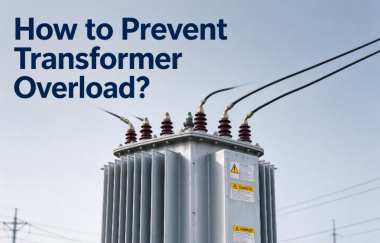
Transformers are important equipment in power systems and industrial power distribution systems, primarily used for voltage conversion and electrical energy transmission. During actual operation, a transformer may become overloaded if it continuously carries a load exceeding its rated capacity. Mild and short-term overloads may be permissible under certain operating conditions, but prolonged or severe overloading can cause the winding temperature to rise continuously, accelerate insulation aging, and increase the risk of equipment failure. Therefore, understanding the signs and causes of transformer overload, as well as appropriate protection measures, is essential for ensuring safe and stable transformer operation.
Catalog
I. What Is Transformer Overload?
II. Transformer Overload Phenomena
III. Hazards of Transformer Overload
IV. Measures to Prevent Transformer Overload
I. What Is Transformer Overload?
Transformer overload generally refers to a condition in which the load carried by a transformer exceeds its rated capacity or rated current, causing the equipment to operate beyond its normal design range. The rated capacity of a transformer is typically expressed in volt-amperes (VA) or kilovolt-amperes (kVA), while the winding current is an important parameter for determining the transformer’s load level.
Transformer overload does not necessarily mean that the equipment will be damaged immediately. The permissible degree of overload depends on factors such as the duration of the overload, ambient temperature, cooling conditions, transformer design, and the thermal characteristics of the insulation system. A mild short-term overload has different effects from prolonged severe overloading. Therefore, a single brief increase in current should not be regarded as evidence of serious transformer failure without considering other operating parameters.
II. Transformer Overload Phenomena
When a transformer becomes overloaded, one of the most obvious signs is that the operating current exceeds its rated value, accompanied by a noticeable increase in the temperature of the windings and transformer oil. If the load continues to increase, the transformer temperature rise may gradually exceed the allowable design limits, while the cooling system may also have to operate continuously at a higher capacity.
Transformer overload can be caused by various factors in practical applications. For example, the simultaneous startup of multiple production machines, a sudden increase in electrical demand, improper load planning, or excessive load concentration on a particular transformer can cause the operating current to exceed its rated value. In addition, under conditions of high ambient temperature, reduced heat dissipation can make the transformer more likely to reach a high temperature rise even when the load has not increased significantly.
III. Hazards of Transformer Overload
First, overload causes the transformer temperature to rise. As the current flowing through the transformer windings increases, winding resistive losses increase significantly, generating additional heat. If the heat cannot be dissipated effectively, the temperatures of the windings, insulation materials, and transformer oil may all increase.
Second, prolonged high temperatures accelerate insulation aging. Transformer insulation systems are sensitive to temperature, and prolonged exposure to elevated temperatures can shorten the service life of insulation materials. As insulation performance deteriorates, the risk of problems such as inter-turn short circuits and ground faults may increase.
Third, severe overload can affect the normal operation of the transformer. When winding or oil temperatures remain above their allowable limits, protection devices may issue alarms or initiate protective actions. In severe cases, overloading may result in transformer shutdown and affect the stability of the associated power supply system.
It should be noted that the main consequence of transformer overload is not simply a “voltage drop.” Changes in the secondary-side voltage are also affected by factors such as transformer impedance, load power factor, and operating conditions on the supply side. Therefore, transformer operating conditions should be evaluated based on multiple relevant parameters.
IV. Measures to Prevent Transformer Overload
Select an appropriate transformer capacity. During the transformer selection stage, the rated capacity should be determined according to the actual load, operating characteristics of electrical equipment, and potential future load growth. This helps prevent the transformer from operating continuously near or above its rated capacity. At the same time, selecting an excessively large transformer should also be avoided to reduce unnecessary equipment investment and operating losses.
Strengthen load management and distribute loads appropriately. In power distribution systems containing multiple transformers, electrical loads should be distributed according to the capacity and actual operating conditions of each transformer. When the load on a particular transformer becomes excessive, load transfer or other appropriate operating measures can be implemented according to the structure of the power distribution system to prevent long-term overload of a single transformer.
Implement temperature and overload protection. Appropriate temperature monitoring, overcurrent protection, and other protective devices should be configured according to the transformer type and operating requirements. When the operating current or temperature reaches a specified limit, the system can issue an alarm or initiate protective actions to reduce the risk of equipment damage caused by severe overload.
Regularly inspect cooling and connection systems. Abnormal cooling-system operation, blocked heat-dissipation paths, and poor contact at electrical terminals can all affect transformer cooling and normal operation. Therefore, cooling equipment, connection components, insulation systems, and other critical parts should be inspected according to the equipment maintenance requirements.
Continuously monitor key operating parameters. Continuous monitoring of transformer load current, temperature, voltage, and other operating parameters can help identify abnormal load conditions at an early stage. When the load shows a sustained upward trend, appropriate operating adjustments can be made in advance instead of waiting until the transformer is already severely overloaded.
V. Conclusion
Transformer overload is an important issue that requires close attention in electrical equipment operation. Overload is generally characterized by operating current exceeding the rated value and an associated increase in temperature rise. Its long-term effects mainly include higher operating temperatures, accelerated insulation aging, and an increased risk of equipment failure. By selecting an appropriate transformer capacity, optimizing load distribution, implementing protective devices, performing regular maintenance, and continuously monitoring operating parameters, the risk of prolonged transformer overload can be effectively reduced, helping improve the safety and reliability of power distribution systems.


